Writing
Have Palate — Will Travel opening spread

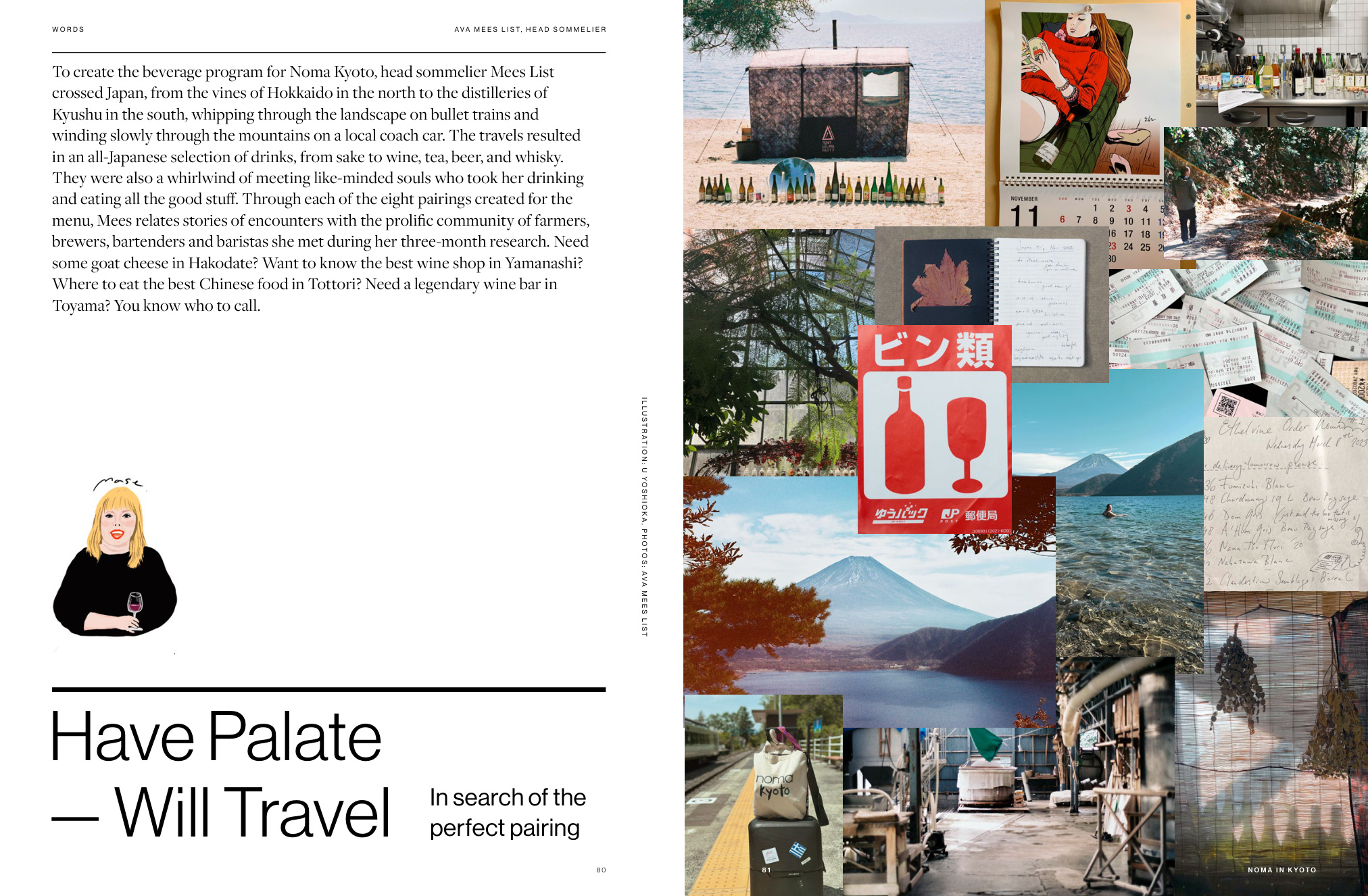
Have Palate — Will Travel

Noma Kyoto Magazine

My knees hurt from trying to sit on the floor, but it doesn’t matter. By now it is completely dark outside and the rain has started pouring down. Sitting under the high roof of the century-old tasting room at Terada Honke I have just gathered enough courage to ask Terada if he would be willing to collaborate on a sake for our Kyoto project, and he has agreed. I cannot believe the honor just bestowed on me and ignore a sleeping left leg while we discuss what kind of sake might work for our event. It is April 2022, three days since I first set foot in this country. I think it counts as a good start.

Illustration: U Yoshioka    Photography: Ava Mees List
Sake for Beginners

Noma Kyoto Magazine

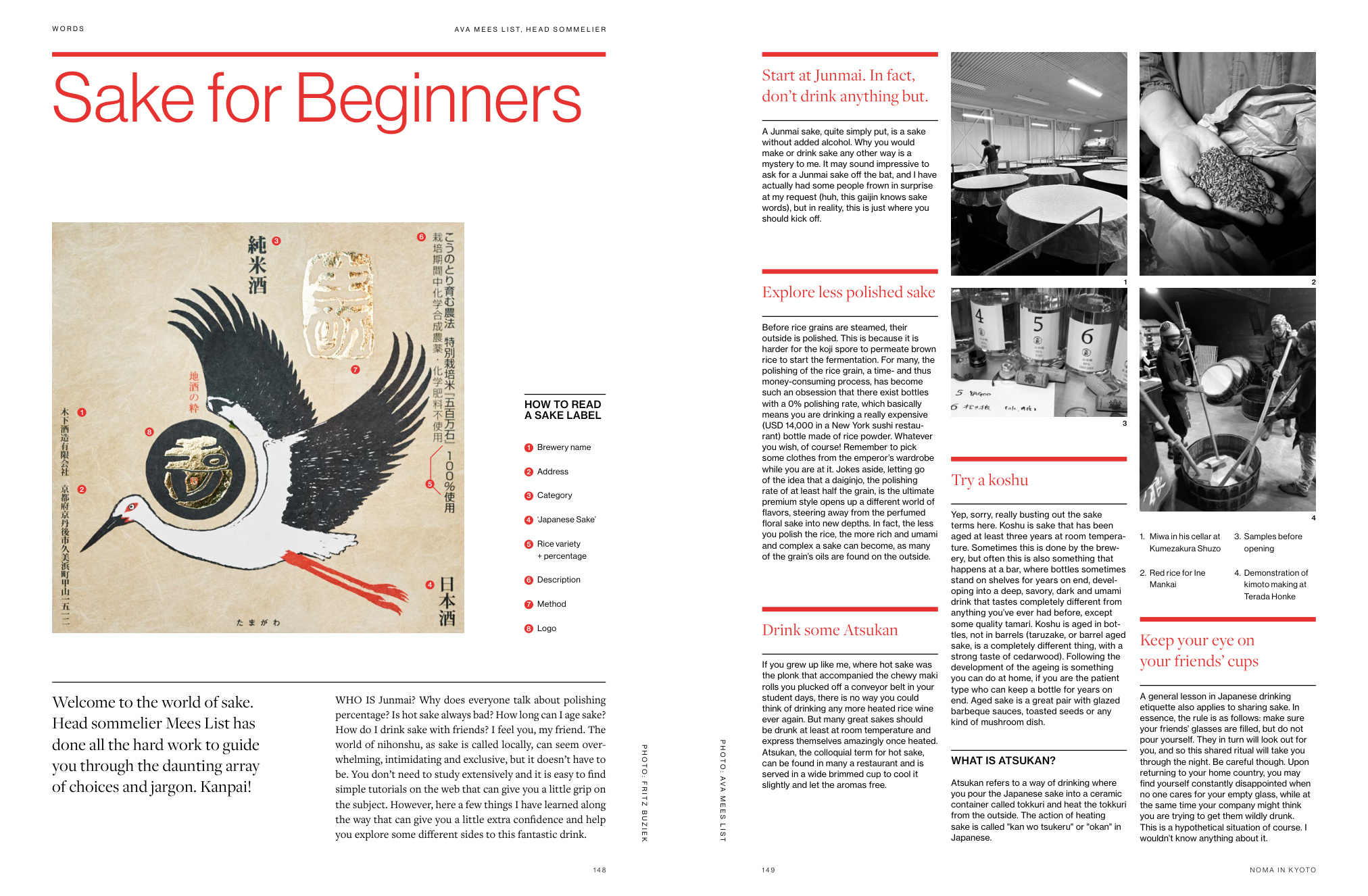
Before rice grains are steamed, their outside is polished. This is because it is harder for the koji spore to permeate brown rice to start the fermentation. For many, the polishing of the rice grain, a time- and thus money-consuming process, has become such an obsession that there exist bottles with a 0% polishing rate, which basically means you are drinking a really expensive (USD 14,000 in a New York sushi restaurant) bottle made of rice powder. Whatever you wish, of course! Remember to pick some clothes from the emperor’s wardrobe while you are at it.

Photography: Fritz Buziek and Ava Mees List
Sake for Beginners opening spread
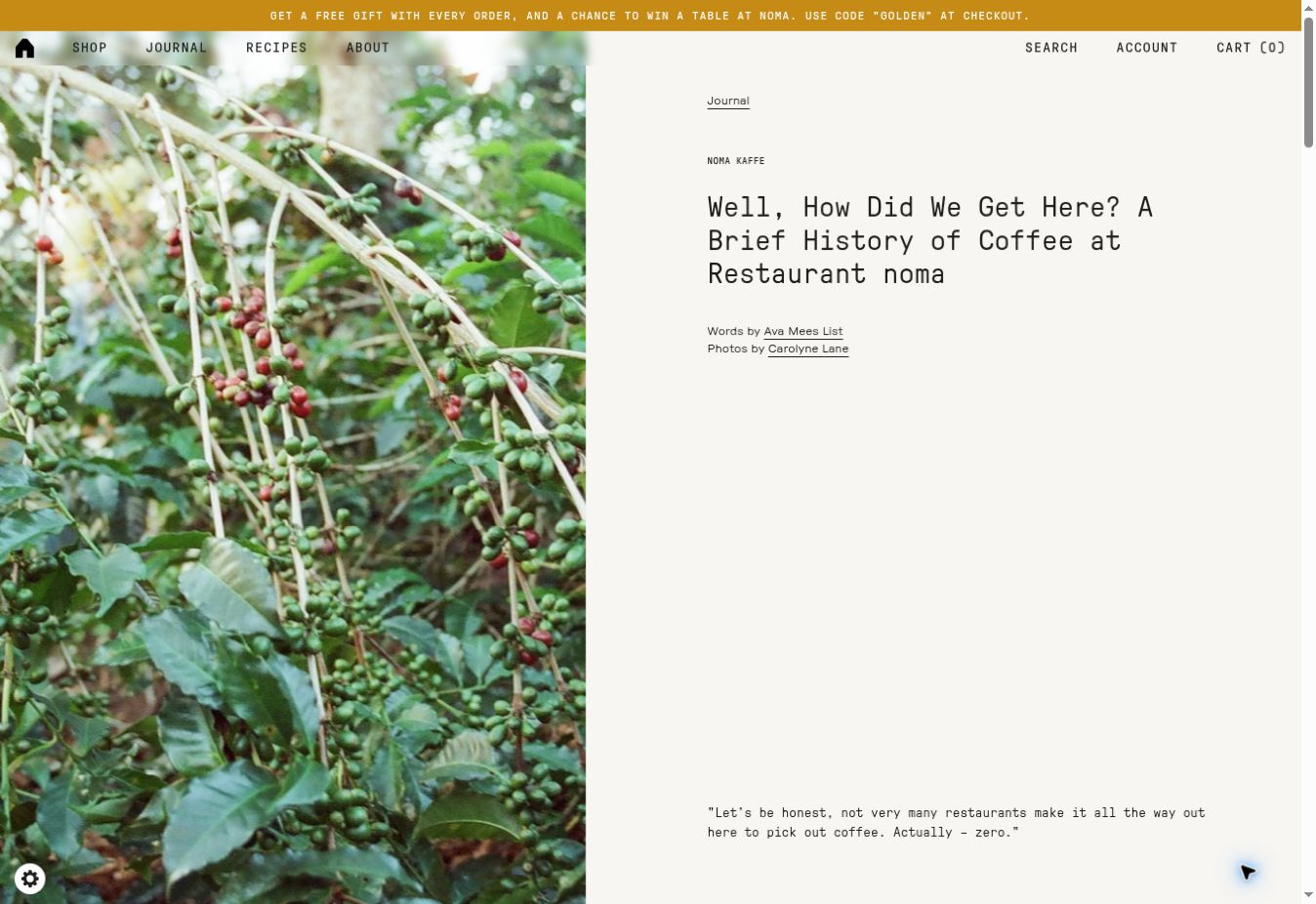
Opening page of Well, How Did We Get Here? on Noma Projects

Well, How Did We Get Here?

A Brief History of Coffee at Restaurant noma
Noma Projects

Back in the car on that bumpy road crossing Huila, the conversation grows more animated as we begin to draw comparison between the progress of the natural wine movement and that of specialty coffee in a town like Copenhagen: unlike the contemporary wine scene, the specialty coffee world tends to be more concerned with winning competitions than the farming behind the coffee that wins those awards.

From the Cup of Excellence for farmers to the Barista Cup for, well… baristas, much emphasis is placed on these events, where sometimes all that seems to matter is how much a coffee can stand out (hence the recent popularity of co-ferments.)

Photography: Carolyne Lane

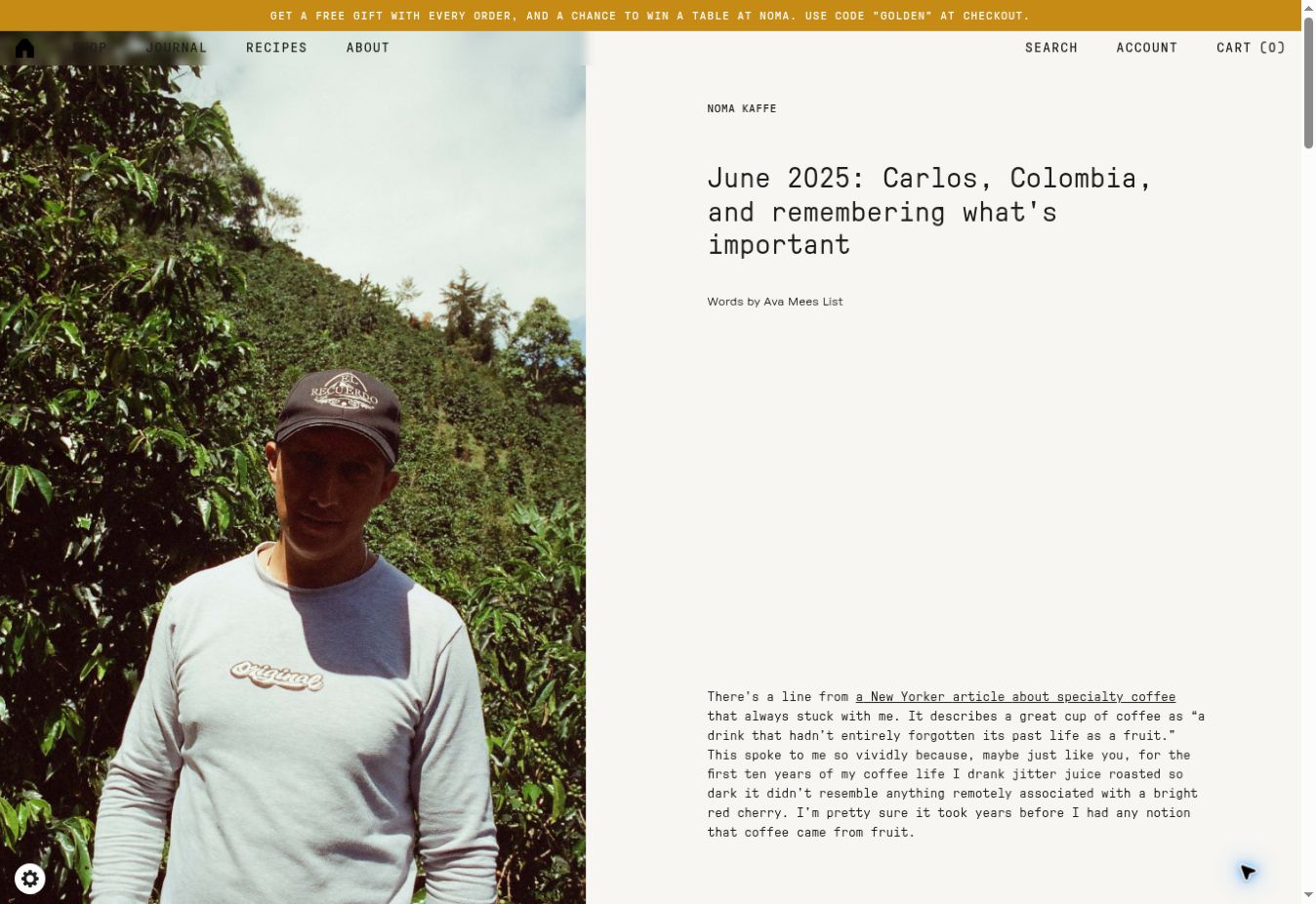
June 2025: Carlos, Colombia,
and Remembering What's Important

Noma Kaffe

There is so much that is overlooked when we think about paid labor on coffee plantations. Yes, you may be paying a good price for the beans, but what does the picker earn? Is a spouse working all day without pay? Does anybody have insurance of any kind? What is a living income, and who decides that? Important questions we found ourselves asking. Luckily, we came across so many great initiatives.

Like The Pickers Project, which contracts pickers and provides salary, healthcare, and training. Both sides benefit: there is an incentive to come and work in coffee and the harvest is done with care and, not unimportantly, joy.

Photography: Carolyne Lane
Opening page of June 2025: Carlos, Colombia, and Remembering What's Important on Noma Projects
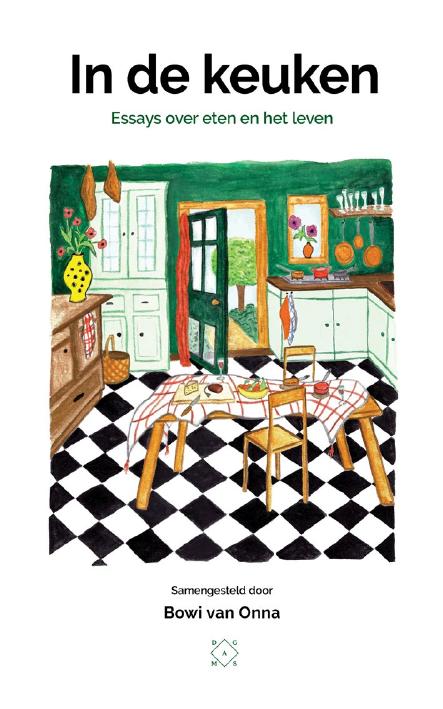
In de keuken book cover

Nooit meer kippendij

In de keuken: Essays over eten en het leven — Das Mag, December 2021

Verreweg het vieste personeelseten dat ik ooit at was in mijn tijd bij een loeidrukke bistro in Parijs. Je kon het de arme kok bijna niet aanrekenen, hij spendeerde tenslotte zestien uur per dag onder een tl-balk aan de mise-en-place met af en toe een uurtje slaap tussen het lunch- en dinerservice. Ik zeg bijna, want om zo goor te koken moet je toch wel echt een beetje je best doen. Twee keer per dag kregen we een trog met gegaarde (gebakken kun je het niet noemen, maar rauw was het gelukkig niet) stukjes van een ondefinieerbaar gedeelte van een kip met daartussen wat witte ui.

Cover illustration: Frank van der Sman    Design: Frank August

Foreword — One Thousand Vines

Pascaline Lepeltier · 2024

We are in Kamo, Kyoto. The tea trees are of the Sayamakaori cultivar, and their leaves will one day be dried, fermented, roasted, and served in our restaurant as a cold infused hojicha blended with cacao and paired with a hand dived Norwegian scallop. But this kind of crazy contrasting landscape can be found all over. We may as well have been standing on the Côte de Py with its gamay vines farmed organically, full of life, sitting right next to parcels looking so unhappy in their barren enormity.

Foreword: Ava Mees List and René Redzepi
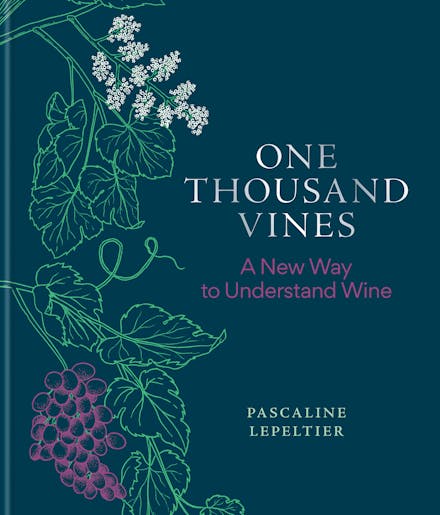
One Thousand Vines by Pascaline Lepeltier — English hardcover cover

Archive

Hard//HoofdMees Leest / Lieve MeesVrij NederlandEssay